Choosing an Offshore Performance Center Console: What Central Florida Buyers Should Look For
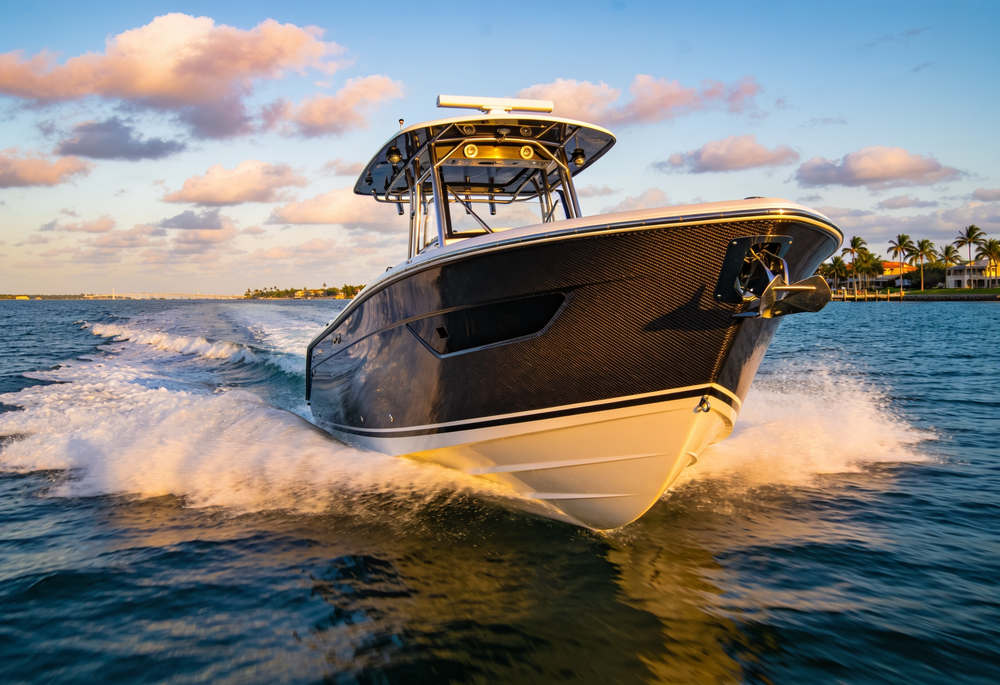
A performance center console that looks impressive at the dock and falls apart in two-foot chop offshore is not a performance boat. It is an expensive disappointment. The difference between a hull that delivers on its spec sheet and one that actually handles big power in real Central Florida offshore conditions comes down to a handful of engineering decisions that most marketing materials gloss over. Knowing what to look for before you buy separates the boats that will still be fun in year five from the ones that teach you an expensive lesson. Velocity Powerboats builds stepped-hull performance center consoles for buyers who want engineering to match the horsepower. Contact Velocity Powerboats to talk hull design and configuration or call (877) 354-1159 and start with a conversation about what your boating actually demands.
Hull design: where performance lives or dies
Buyers shopping in the Sanford area and throughout the Central Florida market often encounter boats that look similar at the boat show but perform very differently on the water. The most consequential difference is usually the hull design. A stepped hull is the architecture that separates a performance center console from a recreational one. The steps, which are transverse breaks in the running surface of the hull, allow air to ventilate beneath the hull at speed. That air reduces the wetted surface area, which cuts drag dramatically and allows the hull to reach higher speeds with the same horsepower while also improving fuel efficiency at cruise. A non-stepped hull simply planes across the water surface; a stepped hull lifts and rides on air pockets, which is a fundamentally different relationship between the hull and the water.
Hull deadrise is the second variable that Central Florida offshore buyers need to understand before evaluating any specific boat. Deadrise is the angle of the hull's V-shape measured at the transom, and it determines how the hull handles chop and beam seas. High deadrise, generally above 24 degrees, produces a softer, more comfortable ride in rough water because the sharp entry cuts through waves rather than pounding over them. Lower deadrise produces a flatter ride that is more stable at rest and in calm conditions but becomes punishing when the seas build. Boaters running out of the St. Johns River area toward the Atlantic and encountering the sea conditions that build on an afternoon east of the inlet need a hull that was designed with that ride quality consideration built in, not one that was optimized for flat-water performance numbers.
Transom strength is a variable that rarely makes it into the brochure but matters enormously when you are hanging 400 or more horsepower off the back of a boat. The transom transfers every bit of engine thrust into the hull structure, and it absorbs the torque and vibration of high-performance outboard engines across every hour of operation. A transom built to an inadequate specification for the power it carries will show stress over time in ways that are expensive to repair and potentially dangerous offshore. Buyers evaluating boats in the New Smyrna Beach and Cape Canaveral offshore corridor should ask specifically how the transom is engineered and what materials and construction method were used, not just what the maximum horsepower rating is.
Materials and construction: what aerospace-grade actually means
Carbon fiber, Kevlar, and vacuum-infused composite construction are terms that appear in a lot of boat marketing. In legitimate high-performance hulls, they mean something specific. Vacuum infusion is a manufacturing process that removes air voids from the laminate by drawing resin through the fiber reinforcement under vacuum pressure. The result is a laminate with a higher fiber-to-resin ratio than hand-laid fiberglass, which means stronger, stiffer structure at lower weight. Weight reduction in a performance hull is not cosmetic. It directly affects top speed, handling responsiveness, and fuel efficiency, and it allows more horsepower to move the boat forward rather than simply lift dead weight.
Carbon fiber reinforcement adds stiffness without adding weight, which matters in a hull that needs to resist the torsional loads of running at high speed in irregular sea states. Kevlar provides impact resistance for the kind of occasional contact that offshore boats experience, whether it is floating debris, a hard landing after a wave, or an uncharted shallow. A hull layup that uses these materials in the right places is engineered for the environment it will operate in. One that uses them selectively for marketing photographs is a different product.
A note for first-time high-horsepower owners
A buyer stepping up to their first triple- or quad-engine center console is stepping into a performance envelope that rewards skill and punishes overconfidence. The boat will go faster than anything the buyer has previously operated. It will also stop, turn, and respond differently under power. A USCG-approved boating safety course, specifically one focused on high-performance powerboats, is the right preparation before taking the helm of a new performance boat for the first time. The time and cost of the course are trivial relative to the value of the boat and the wellbeing of everyone aboard. Velocity recommends it to every first-time high-horsepower buyer as a baseline, not a suggestion.
Matching the hull to your boating
The right performance center console for a buyer running day trips to the Gulf Stream is a different boat from the one that makes sense for someone doing weekend runs to the Bahamas or fishing inlet-to-inlet along the Atlantic coast. Engine count, fuel capacity, freeboard, and hull length all affect which mission the boat handles well. A center console boat built around the specific use case, rather than selected from a generic inventory spec, produces a buyer who is still happy with the decision three years in.
The same principle applies when evaluating the powerboat configurations available at different engine and size brackets. Talking through the use case before the spec is the conversation that leads to the right outcome rather than the most impressive-looking brochure page.
If you are a serious buyer in the Central Florida market and want to talk hull engineering and configuration rather than marketing, Velocity Powerboats is the right conversation to have. Call (877) 354-1159 or reach out to Velocity Powerboats to configure your offshore center console and build the boat around what your boating actually demands.