Florida's Gulf Stream punishes weak hulls. You know the feeling of a brutal 50-mile run out of Ponce Inlet where every wave feels like hitting solid concrete. For residents taking offshore power boats Central Florida, US, into the deep blue, the right hull geometry dictates whether you come home exhausted or comfortable. Contact Velocity Powerboats at (877) 354-1159 to find your next vessel. We build boats that handle the roughest water so you can focus on the fish.
What Is Hull Deadrise on a Boat?
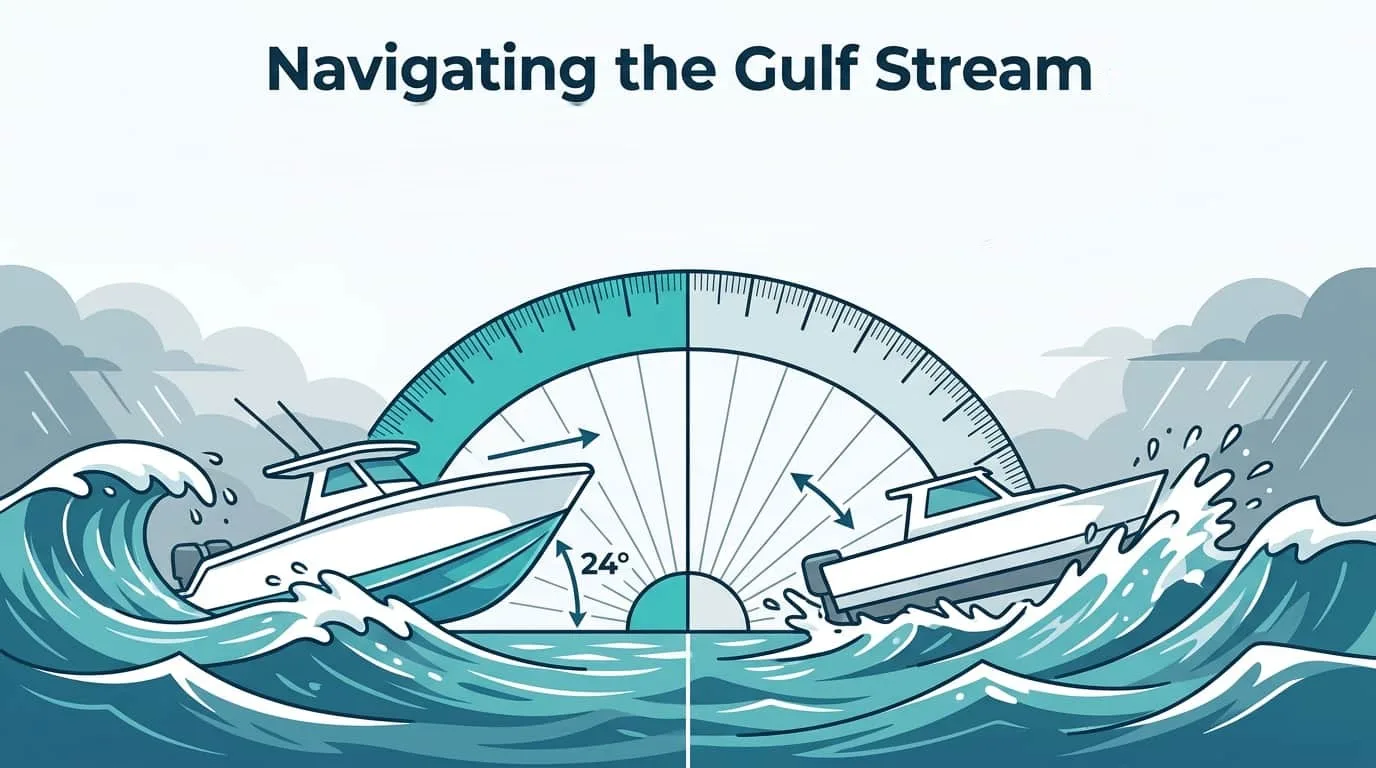
Hull deadrise is the angle between the boat's bottom and a horizontal line, measured at the transom. Most offshore power boats Central Florida, US, feature a deep-V deadrise of 22 to 24 degrees. This sharp angle allows the hull to slice through heavy waves rather than slamming flat into them.
In our four decades building boats, our team typically finds that a 22-degree minimum is required for serious Gulf Stream fishing. Anything flatter will beat you up in a typical three-foot Florida chop. A deep-V hull acts like a shock absorber for your spine. It parts the water efficiently and pushes the spray outward. This keeps your deck dry and your crew safe during long runs to the fishing grounds.
How Does Deadrise Affect Offshore Ride Quality?
A higher deadrise angle directly reduces hull slamming and impact fatigue by up to 60 percent. When running 40 miles offshore to fish the Gulf Stream, a deep-V hull displaces water efficiently. This creates a much softer landing as the boat re-enters the water off a wave crest.
Hardcore anglers running out of Cape Canaveral know how nasty the afternoon chop gets. The wind picks up, the current pushes against you, and suddenly you face steep, closely packed waves. A hull with a 24-degree deadrise cuts through that chop. It prevents the boat from launching off every single crest. Your knees and back will thank you after a 10-hour day on the water. We designed the Velocity Powerboats lineup specifically to conquer these exact offshore conditions.
Deadrise vs. Stability: What Is the Trade-Off?
Deep-V hulls with high deadrise lean more at rest and require about 15 percent more fuel to plane compared to flatter hulls. A flatter bottom offers great stability when anchored but delivers a bone-jarring ride in heavy seas.
Boat designers have to balance the need for speed with the need to stand comfortably while fishing. We offset the side-to-side roll of a deep-V hull by adding reverse chines and lifting strakes. These flat surfaces run along the length of the hull. They provide extra buoyancy and grip the water when the boat sits still. If you look at options like our center console boat rentals, you will see how we engineered the 262cc to handle the rough stuff while remaining a stable fishing platform. You get the soft ride of a deep deadrise without feeling like you will tip over while reeling in a big catch.
What Other Features Improve Your Offshore Ride?
Your ride quality also depends heavily on lifting strakes, reverse chines, and the boat's center of gravity. Strakes lift the hull out of the water to reduce drag. Reverse chines knock down spray and add side-to-side stability when the boat is at rest.
Weight distribution plays a massive role in how a boat handles the Gulf Stream. A hull built with a high-density Coosa composite transom absorbs vibrations better than traditional wood cores. It also keeps the overall weight down. We use an infused construction method to glass the hull and deck completely together. This creates a rigid, unified structure. When you hit a wave at 60 miles per hour, a poorly built boat will flex and rattle. A solid, composite-cored boat feels like one massive piece of fiberglass parting the ocean.
How to Choose a Vessel for Central Florida Waters
Choose a boat with at least a 22-degree deadrise, heavy composite construction, and enough fuel capacity for a 10-hour offshore trip. You should expect to invest between $100,000 and $250,000 for a true offshore-capable center console that can safely handle the Gulf Stream.
If you regularly run out of Sebastian Inlet, you need to trust your hull completely. The standing waves at the mouth of that inlet demand a boat that responds instantly to the throttle. Look for a boat rigged with reliable power, like twin 300-HP Mercury Verados, and a hull proven on the racecourse. You can even test these specific hull dynamics through powerboat rentals to feel our 22 Punisher hull in action before making a massive purchase. Test driving offshore power boats Central Florida, US, gives you the real-world experience you need to make an informed decision.
Need Help Finding Your Next Offshore Boat?
When you run 50 miles into the Atlantic, you need a boat built for the battle. Do not settle for a hull that beats you up and leaves you exhausted before you even drop a line. We build boats that take the beating so your body does not have to. Contact Velocity Powerboats at (877) 354-1159 to speak with our team about your next custom build.