Learning to navigate the waterways of Central Florida starts right here in Sanford. To get started safely, you need to complete a Florida-approved boating safety course and spend guided hours practicing on local lakes. If you want to explore the water in style, contact Velocity Powerboats at (877) 354-1159 to secure your perfect vessel. We build the offshore machines that make Florida living great.
What Are Florida's Boating Regulations?
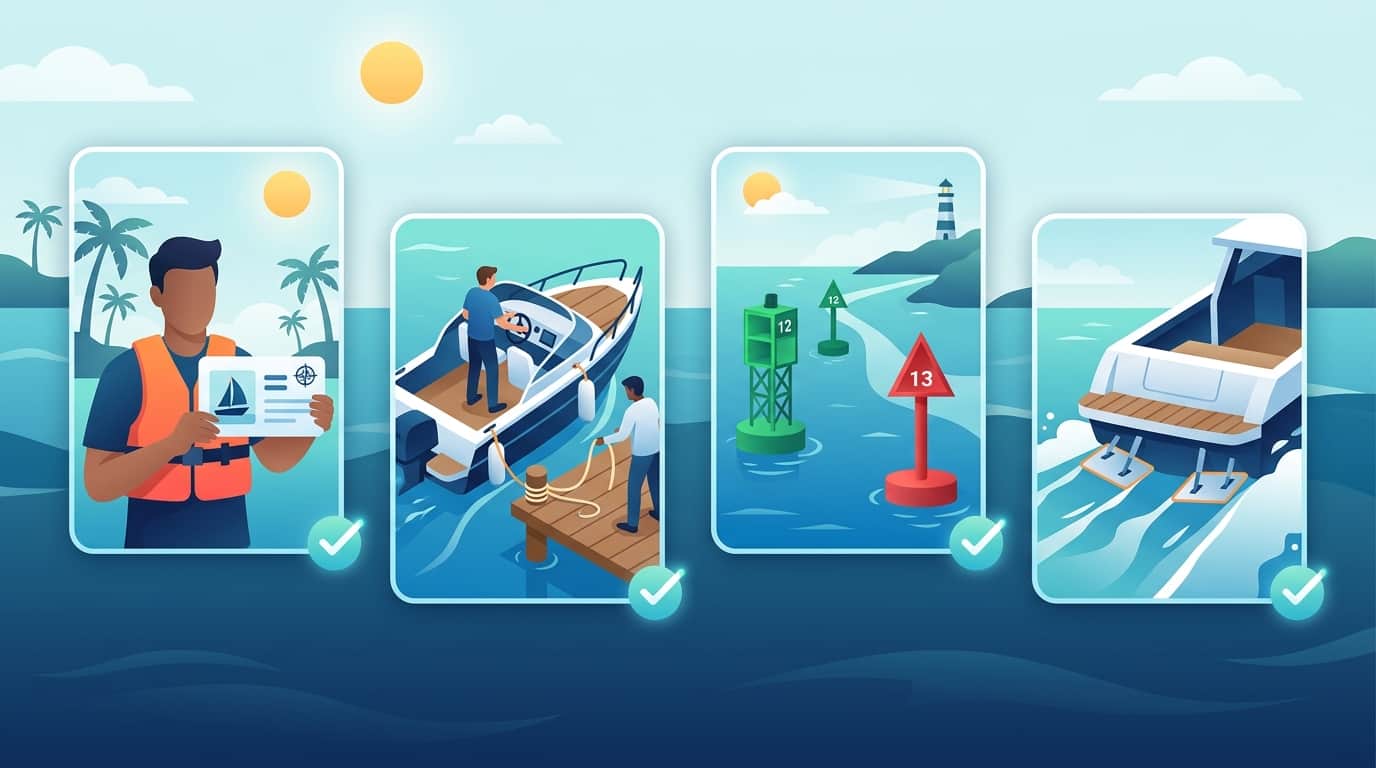
Anyone born on or after January 1, 1988, needs a Boating Safety Education Identification Card to operate a motorboat with 10 horsepower or more in Florida. You get this card by taking a state-approved course online or in person. Expect to spend about four to eight hours completing the class. Once you pass, the certification lasts a lifetime.
Florida laws mandate specific safety gear for every vessel. You must keep Coast Guard-approved life jackets on board for every single passenger. Children under six must wear their life jackets at all times while the boat is underway. You also require a type B-1 fire extinguisher, a sound-producing device like a loud whistle, and visual distress signals if you plan to navigate coastal waters at night.
How Do You Learn to Drive a Boat in Sanford?
Figuring out how to learn to drive a boat in Sanford involves a mix of classroom theory and hands-on practice. A local captain can provide private lessons on Lake Monroe for $150 to $300 per hour. During these sessions, you'll master basic helm controls like the steering wheel, throttle, and trim. You'll also learn the exact pre-departure checks required for a safe trip. Before every single launch, you must check your fuel levels, test the oil pressure, and review the local weather forecast.
We offer high-performance powerboat rentals that let you feel the power of a finely tuned machine once you have your license. Start small with basic maneuvers, learn the ropes, and work your way up to more powerful vessels. Understanding how a boat handles wind and current takes time. Tides shift daily on the St. Johns River. Sandbars hide just beneath the surface and catch new boaters off guard every week.
What Are the Best Boats for Beginners?
Small center consoles and pontoon boats are the best vessels for beginners to learn on. Pontoons offer a wide, stable platform that doesn't rock heavily in the wake of other boats. Center consoles give you a clear 360-degree view of your surroundings. This visibility makes docking and tight maneuvers much easier.
Once you understand the basic anatomy of a vessel, the process becomes less intimidating. You steer from the helm. You use the throttle to control your speed and the trim to adjust the angle of your propeller in the water. Trimming the engine down pushes the bow down. Trimming the engine up lifts the bow, which increases your speed and fuel efficiency by up to 30%.
Where Should Novice Boaters Practice?
New boaters should start practicing docking and undocking in calm, open water before trying to squeeze into tight slips at Marina Island. Once you feel comfortable maintaining a straight course at low speeds, you can confidently navigate the channels. Pay close attention to red and green navigation buoys. Red right returning is the golden rule. Keep the red markers on your right side when returning from open water.
In our years serving Central Florida, we've learned that wind causes the most trouble for new drivers. Boats don't have brakes. When you shift into neutral, the wind and current immediately take control of your vessel. Practice approaching a fixed object like a buoy at low speed to see how the wind pushes your bow.
Why Take a USCG Course Before Driving a Center Console?
We've seen exactly what happens when inexperienced drivers take the helm of a massive vessel. Last spring, a new owner bought a high-horsepower offshore rig without formal training. He panicked during a sudden afternoon thunderstorm near Lake Monroe. He pushed the throttle too hard, caught a heavy wake, and nearly swamped his brand-new boat.
Taking a formal USCG-approved boating safety course prevents these terrifying situations. You learn how to handle heavy wakes and sudden squalls properly. By the time you step into one of our high-end center console boat rentals, you'll possess the skills to manage that incredible power safely. You will know how to react when an emergency happens.
How Do You Anchor in Florida Waters?
Dropping an anchor requires specific techniques depending on the bottom surface. In sandy areas, a fluke-style anchor works perfectly. You need to let out the anchor line that is five to seven times the depth of the water. If the water is 10 feet deep, let out 50 to 70 feet of line to ensure the anchor bites into the sand.
Grassy bottoms require a plow anchor to cut through the vegetation. Always respect local manatee zones to avoid costly fines while navigating to your anchor spot. Speeding through a protected area can result in tickets exceeding $500. Protect the fragile seagrass beds by trimming your engine up in shallow water to prevent prop dredging.
How Much Does It Cost to Boat in Florida?
Most residents researching how to learn to drive a boat in Sanford find the initial costs surprisingly affordable. A basic online safety course costs exactly $34.95 through authorized state providers. Private on-water instruction runs around $400 for a comprehensive four-hour session. Once you learn the basics and get licensed, you'll spend roughly $150 to $250 a day on fuel and ramp fees, depending on your engine size and how far you cruise.
Ready to Hit the Water?
Florida waterways offer total freedom and endless adventure. Once you know how to learn to drive a boat in Sanford, the entire state opens up to you. Practice your docking, learn the navigation markers, and always respect the weather. Check your battery and fuel before you leave the dock. Velocity Powerboats builds the finest offshore performance boats to elevate your weekends on the water.
Are you ready to experience the ultimate ride? Contact Velocity Powerboats at (877) 354-1159 today to talk to our team.