Power Boats Central Florida: Your Complete Buying Guid
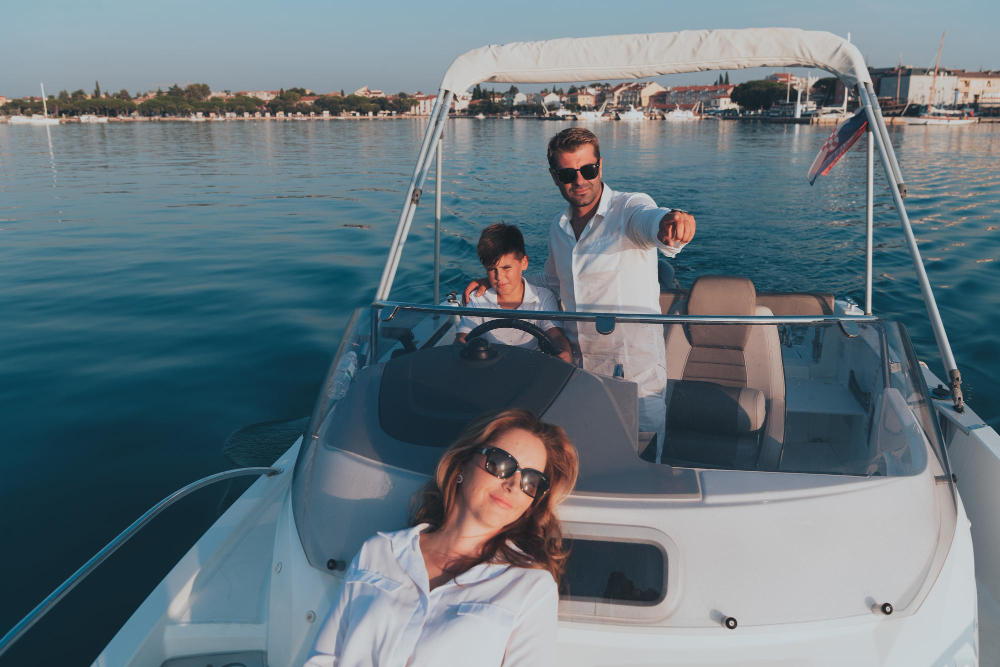
Shopping for power boats in Central Florida isn't like buying a car. There's no "one size fits all" when your boat might spend mornings on Lake Tohopekaliga and afternoons running through choppy Gulf waters off Clearwater. You need a vessel built for Florida's unique boating conditions, and that starts with knowing what to look for.
Most buyers spend $40,000 to $150,000 on a quality powerboat, so getting this decision right matters. Here's what you need to know before you sign.
What Type of Boating Will You Actually Do?
Answer this honestly: Will you mostly fish the flats around Mosquito Lagoon, or do you plan to run offshore from Port Canaveral?
Florida's diverse waterways demand different hull designs. A boat perfect for calm inland lakes like Lake Jesup won't handle well when you're fighting three-foot swells in the Atlantic. If you're planning fishing trips to the Gulf Stream, you'll want a deep-V hull with at least 20 degrees of deadrise. For bay fishing and cruising around Winter Park's chain of lakes, a modified-V hull gives you better shallow-water access.
Think about your typical weekend, not your dream vacation. If you'll be trailering from Sanford to different launch sites, factor in your truck's towing capacity. A 26-foot center console weighs 4,000–5,500 pounds with trailer—that's beyond what most half-ton trucks can safely handle.
Why Hull Design Matters More Than You Think
Florida's Gulf Coast and Atlantic side behave like two different oceans. The Gulf typically offers calmer waters and gradual depth changes. The Atlantic? You'll hit deeper water faster, with choppier conditions and stronger currents.
Your hull needs to match where you'll actually boat. Here's what that means:
A sharper entry (the angle at the bow) cuts through waves instead of pounding over them. If you're running out of Sebastian Inlet or crossing to the Bahamas, this reduces fatigue and keeps your passengers comfortable. Boats designed for inland lakes often have flatter entries that slam in offshore conditions.
Check the strake design too. Those ridges running along the hull aren't just decorative—they control how water flows and affect your ride quality. Poorly designed strakes create spray that soaks everyone on deck. Quality manufacturers like those specializing in powerboat rentals spend years refining these details through testing.
The thickness of the fiberglass matters for Florida's brutal sun and saltwater exposure. A hull that's 3/8-inch thick at the transom will hold up better than thinner construction, especially if you're keeping the boat in the water at a Sanford marina year-round.
What Manufacturer Reputation Actually Tells You
A boat's brand name predicts more than you'd think. Here's what we've learned from years in Central Florida's marine industry:
Look beyond the showroom shine. Visit local marinas around Lake Monroe or anywhere in the power boats Central Florida territory and ask owners about their experiences. Which brands do you see people keeping for 10+ years? Those are the ones built to last.
Check how long the company's been in business. Boat manufacturing requires specialized knowledge that takes decades to perfect. A builder that's survived multiple economic downturns probably makes a solid product. Companies that disappear after five years leave you with an orphaned boat—good luck finding parts.
Research their warranty claims process. Call the manufacturer directly and ask how long warranty repairs typically take. A three-year warranty means nothing if it takes six months to get parts. Companies with strong dealer networks in Florida can often complete warranty work in 7–14 days.
Getting Real Value From Standard Features vs. Upgrades
Here's where buyers often overspend or regret cutting corners.
Standard features on quality power boats Central Florida dealers stock should include: a reliable bilge pump system (you'll need it during afternoon thunderstorms), marine-grade upholstery that resists mildew in our humidity, and adequate storage for safety equipment required by Florida law.
Worth upgrading: A better fish finder if you're serious about fishing (expect to add $2,000–$5,000), a quality sound system that can handle saltwater exposure ($1,500–$3,000), and upgraded seating that won't crack under Central Florida's intense UV rays within two years.
Skip these: Factory tower speakers that add $2,500 but sound worse than aftermarket systems you can install for $800, overpriced trailer upgrades that local shops can do for 40% less, and fancy LED lighting packages that look cool but add $3,000 to your price.
One smart upgrade: hydraulic steering if you're buying anything over 24 feet. It's typically a $1,200–$1,800 add-on, but it makes a massive difference in handling and reduces arm fatigue on long runs.
Why Local Dealer Support Matters More in Florida
Your boat will need service. That's not pessimism—it's Florida reality. Saltwater corrodes, sun deteriorates, and our year-round boating season means more wear.
Check whether the dealer has technicians certified by your boat's manufacturer. This matters for warranty work and ensures they've been trained on your specific model's systems. Ask how far out they're scheduling service appointments. If it's more than three weeks during winter (our slow season), that dealer's overwhelmed.
Parts availability can make or break your boating season. Quality center console boat rentals and sales operations stock common parts locally. Otherwise, you're waiting on shipping every time something breaks. A dealer with a parts inventory can often fix minor issues same-day instead of having you sidelined for a week.
Look for dealers offering mobile service within 50 miles. When your boat won't start at the Sanford launch ramp on Saturday morning, you'll pay a premium for emergency service. Some dealers include a certain number of mobile service calls annually—that's worth negotiating for.
Which Powerboat Brands Hold Their Value
Resale value in Florida's market varies wildly by brand. Here's what actually affects it:
Boats from established manufacturers with strong dealer networks typically retain 60–70% of their value after five years, compared to 40–50% for lesser-known brands. That $80,000 boat could be worth $48,000 or $56,000 depending purely on the name on the hull.
Center consoles hold value better than bowriders in Central Florida because they're more versatile. You can fish, dive, and cruise in the same boat. Bowriders limit your options.
Boats between 22 and 28 feet sell fastest in our market. Anything under 20 feet feels cramped for families, and boats over 30 feet require larger tow vehicles and cost more to store—narrowing your buyer pool when it's time to sell.
Condition matters more than age for resale. A 10-year-old boat that's been kept under cover, rinsed after every use, and serviced on schedule will sell for more than a 5-year-old boat that's been neglected. Keep every service record.
Your Pre-Purchase Checklist
Before you finalize any deal on power boats Central Florida dealers offer, verify these details:
Get a professional survey. This costs $18–$25 per foot of boat length, but it catches problems the seller might've missed (or hidden). A surveyor will check the hull for soft spots, test all systems, and verify the boat matches its specs.
Run a hull identification number (HIN) check. This is like a vehicle history report but for boats. It shows if the boat's been in accidents, has liens, or was previously salvaged.
Test drive in real conditions. Don't just idle around the marina. Get the boat up to cruising speed, make sharp turns, and see how it handles wakes from passing boats. Bring someone who knows boats if you're new to this.
Verify the hours on the engine. Low hours don't always mean better—engines that sit unused can have more problems than ones used regularly. Ask for service records showing the engine's been maintained.
Check for soft spots in the deck. Walk around pressing firmly with your foot. Soft spots mean water intrusion and expensive repairs ($5,000–$15,000 to fix properly).
Confirm what's included. Does the price include the trailer? Safety equipment? That fancy electronics package in the photos? Get everything in writing.
Review the warranty details. How long does it last? What's actually covered? Is it transferable if you sell the boat in two years? Does it require service at specific dealers?
Ready to Find Your Perfect Boat?
Shopping for power boats in Central Florida doesn't have to be overwhelming. Start by honestly assessing how you'll use the boat, then prioritize hull design and build quality over flashy add-ons you might not need.
Don't rush this decision. The right boat will still be there next week, and the wrong boat will cost you thousands in repairs and frustration.
When you're ready to talk specifics about what's available and what makes sense for your needs, contact Velocity Powerboats at (877) 354-1159. We're located right here in Sanford and know Central Florida's waters inside and out.